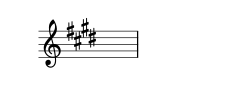
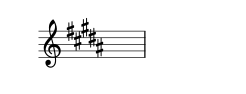
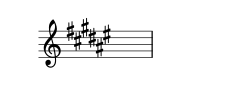
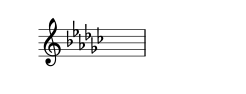
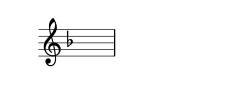
Key Signature vs Tonic
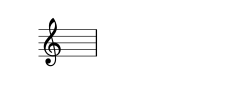
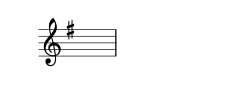
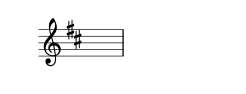
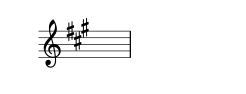
Key signature = what the page assumes
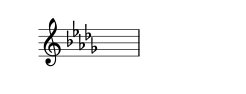
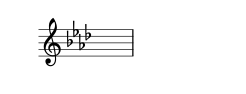
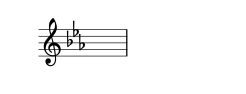
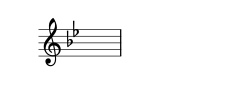
A key signature is a writing shortcut: it pre-loads certain sharps/flats so you don't have to mark them every time. It usually reflects a diatonic baseline (the default 7-note collection), but it does not guarantee the music stays diatonic.
Tonic = where "home" is
The tonic is the pitch that functions as home—the note melodies resolve to and the pitch other notes feel "measured against."
Example 1: Minor key with harmonic minor behavior
Take a piece notated in a minor key with its normal key signature. In real repertoire you'll often see one note repeatedly raised with an accidental right before cadences to create a stronger pull back to the tonic.
- On the page: same minor key signature throughout
- In the music: frequent raised leading-tone accidentals (harmonic-minor effect)
Key signature gives the default diatonic set; harmonic minor is "default + a consistent raised note," written with accidentals.
Example 2: Same key signature, different tonic → different mode
Two melodies can use the same key signature (same default sharps/flats) yet sound like different worlds if they resolve to different "home" notes.
- Melody #1 cadences to the "major home" the key signature suggests → feels like major
- Melody #2 uses the same written notes but cadences to a different home → now it feels like a mode (e.g., Dorian/Mixolydian/etc.)
What changes the sound is not the signature—it's the tonal center (the tonic).
Example 3: Non-diatonic modes
Some commonly used modes/scales aren't neatly covered by a standard key signature. Practical strategies:
- Use the closest diatonic key signature, then mark altered tones as accidentals. You'll see the same accidentals recurring: those are the "mode flavor notes."
- Use no key signature (common in jazz/pop and film cues) when the collection is highly chromatic or shifts rapidly.
Summary
- Key signature = default staff spelling shortcut (diatonic baseline)
- Tonic = the pitch that functions as home
- Scale/mode choice = the actual pitch-set used around that tonic, often requiring accidentals beyond the key signature